On Neil Ferguson and Government-sponsored Modelling
When Academic Epidemiology is Corrupted for Political Ends
Introduction
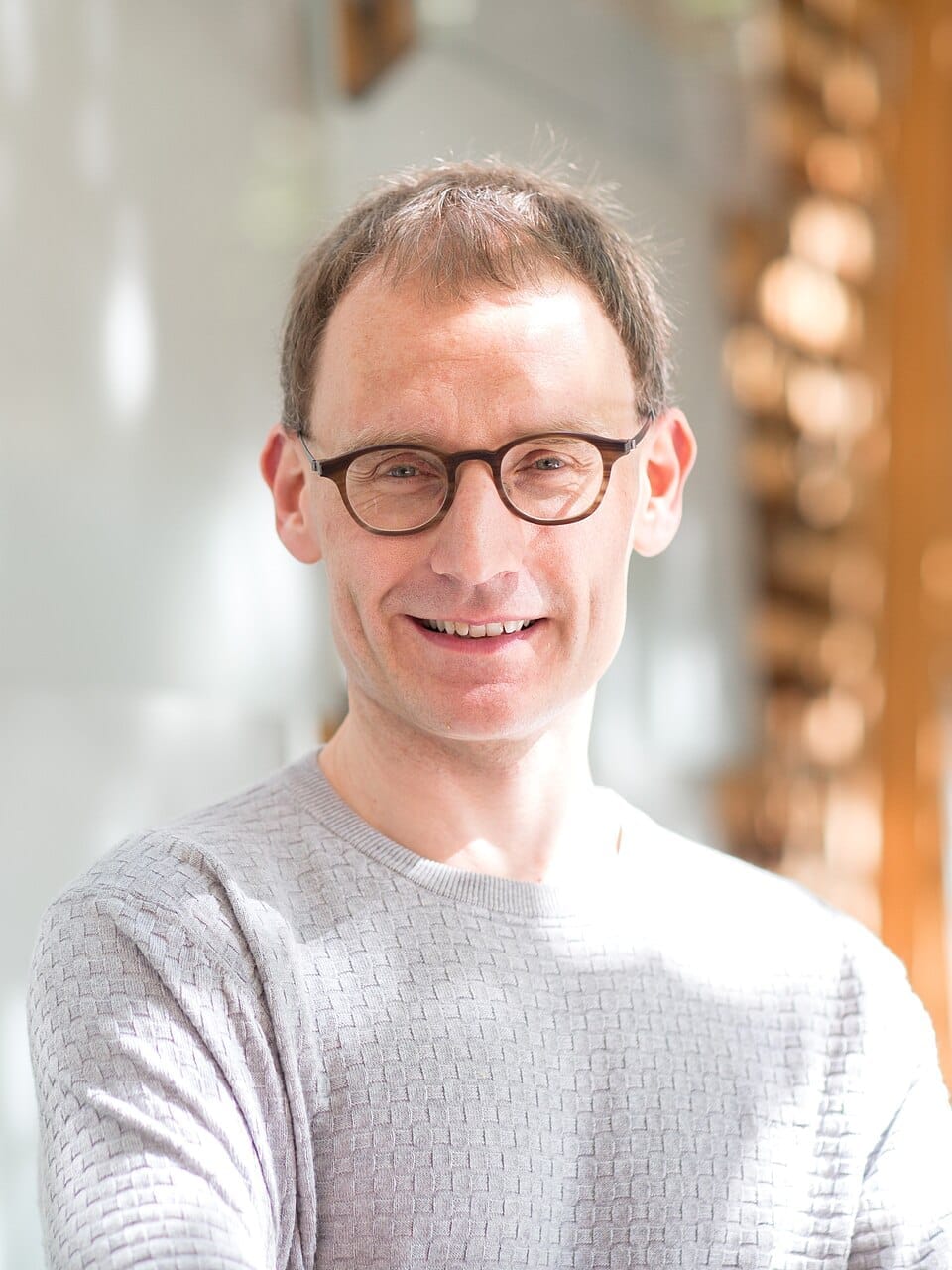
Professor Neil Ferguson of Imperial College, London, has a long history of producing wildly exaggerated “reasonable worst case scenarios” for disease outbreaks based on mathematical modelling. Typically, the idea is to legitimise a particular government response and to promote the interests of Big Pharma. Below is a reminder of some of his failed forecasts down the years, as well as some reflections on government-sponsored modelling in general.
Foot and Mouth Disease
During the 2001 foot and mouth epidemic, Ferguson’s modelling in Science contributed to the culling of over six million animals (to deal with only 2,000 diagnosed cases) at an estimated cost of £10 billion to the UK economy and with a significant impact on UK food security.
“Culling is predicted to be more effective than vaccination,” he claimed, hence the alleged desirability of “more aggressive preemptive slaughter of animals” (Ferguson et al., 2001, pp. 1155, 1158).
The attendant policy of “contiguous culling” – slaughtering all susceptible animals within 3km of known cases – led to 15% of Britain’s farm animals being slaughtered in 2001 and was criticized by the Pirbright Institute as scientifically unsound (Lewis-Stempel, 2021). Most of the animals killed were healthy, the rest highly likely to recover.
The abiding imagery is satanic: pyres of burning bodies, horns clearly visible, often photographed at night, showing “the Devil’s cloven-hooves” (Lewis-Stempel 2021).
Creutzfeldt-Jakob Disease
As lead author of a 2002 paper in Nature, Ferguson claimed that Creutzfeldt-Jakob disease (the human variant of bovine spongiform encephalopathy, or BSE) could result in between “50 and 50,000 human deaths considering exposure to bovine BSE alone, with the upper bound increasing to 150,000 once we include exposure from the worst-case ovine BSE scenario examined” (Ferguson et al., 2002, p. 420).
Yet, according to the University of Edinburgh’s National CJD Research and Surveillance Unit (2018), only 88 people died from CJD in the UK in 2001, 95 in 2002, and 108 in 2003 – annually just 0.2% of Ferguson’s 50,000 figure or 0.07% of his worst case scenario involving sheep.
Ferguson et al. (2002, p. 420) state explicitly that their aim is “not to evaluate the probability that BSE has entered the sheep flock, but rather, given the pessimistic assumption that infection has occurred, to explore its potential extent and pattern of spread.” Thus, the study works from unfounded worst-case assumptions to model maximum disaster, ostensibly in the name of informing policy with respect to risk reduction measures (Ferguson et al., 2002, p. 423).
Avian Flu
In 2005, Ferguson likened avian flu to the Spanish Flu of 1918, telling the Guardian that the worldwide death toll could hit “around two hundred million” as it “spread across Europe and into the Americas” (cited in Sturke, 2005).
As of October 2020, only 455 people worldwide had died from avian flu since 2003, with none of those deaths occurring in Europe and only one in the Americas (WHO, 2020).
Lamenting the difficulty of finding an effective vaccine for the H5N1 strain, Ferguson recommended building up an international stockpile of 3 million courses of antivirals” (“UK would be ‘overwhelmed’ by bird flu,” 2005) – implying massive profits for Big Pharma.
Swine Flu
On 1 May 2009, Ferguson, in his capacity as a member of the World Health Organisation task force on swine flu, claimed that “40% of people in the UK could be infected within the next six months if the country was hit by a pandemic” (cited in Chossudovsky, 2020). At that point there was only one confirmed case of swine flu in the entire European Union.
In July 2009, Britain’s Chief Medical Officer, Liam Donaldson, warned that swine flu could kill 65,000 people in the UK, with 3,100 deaths representing “the most optimistic scenario” (cited in Bowcott, 2009). By March 18, 2010, only 457 people had died from swine flu in the UK (Hine, 2010). Donaldson later claimed that he had merely been “the messenger for the 65,000 figure which came from the scientific modellers” and “was not confident in the figures he was communicating yet felt unable to dissent” (Science and Technology Committee, 2011).
Ferguson, for his part, blamed failures in communicating data to the public, noting that initial case fatality estimates “got revised really quite rapidly, so within a month we were down from about that 2% level closer to 0.4% case fatality. Six weeks later it was down to below 0.1% - one in a thousand case fatality” (Science and Technology Committee, 2011). The eventual CFR was just 0.026% (Triggle, 2009).
Dr Justin McCracken, Chief Executive of the Health Protection Agency, added that although both best and worst case scenarios had been presented, the press had focused only on the latter (Science and Technology Committee, 2011).
The Science and Technology Committee (2011) recommended that “the Government must make continual efforts to establish the concept of ‘most probable scenarios’ with the public” in order to “provide the public with a better sense of the likely risks.”
“Covid-19”
Ferguson’s “Covid-19” modelling matched an established pattern.
First came the hyperbolic projections of deaths based on models not fit for purpose: 510,000 in the UK in an unmitigated epidemic, 250,000 with mitigation, without even taking seasonality of respiratory disease into account (Ferguson et al., 2020, pp. 7, 16). The code used for Ferguson’s original modelling was of such poor quality that Imperial College was too ashamed to release it (Denim, 2020).
Then came the media hype that is used to steer public policy, in this case influencing the “lockdown” decision on March 23, 2020. Contrary scientific research was ignored, downplayed, or attacked.
Then, once the political objective had been achieved, the projections were rapidly revised downwards: on March 25, 2020, Ferguson reduced his projection to 20,000 deaths when appearing before the UK parliamentary Select Committee on Science and Technology.
The get-out-of-jail-free card is that mitigation measures can always be proclaimed effective in lowering the death count, while new data coming in renders previous forecasts redundant. Besides, it is always prudent to plan for the worst, and the press can always be blamed for focusing on the “wrong” statistics. “Expert” modellers can thereby get away with producing propaganda masquerading as science.
Despite his repeated failed forecasts and breaking “lockdown rules” when meeting with his married mistress, Antonia Staats, Ferguson’s influence remained considerable during Covid, both in his capacity as a member of NERVTAG (the New and Emerging Respiratory Virus Threats Advisory Group) and via the mainstream media, which continued to afford him prime-time slots, e.g. as an “expert adviser” rolled out to explain “the science” behind the second national “lockdown” on BBC Radio 4 on October 31, 2020. Ferguson was also credited with playing a key role in the late decision to reduce the five-day social mixing period over Christmas to just limited restrictions on Christmas Day (Norton, 2020). On Christmas Day itself, the Times published a defence of Ferguson, noting in the subtitle that “Professor Neil Ferguson says he was mostly right” (Whipple, 2020).
Conclusion
Because of his usefulness to the Establishment, Ferguson is protected, much as “pseudoscientific charlatan” Paul Ehrlich’s work on population control continued to be promulgated for decades despite offering one failed prediction after the next (Corbett, 2018).
The Scientific Advisory Group on Emergencies (SAGE) models that were used to inform Covid policymaking in the UK were similarly flawed and hyperbolic (Spectator, n.d.; Simmons, 2022). They came from the London School of Hygiene and Tropical Medicine, Warwick University, Cambridge University, and Imperial College, London.
Academic disease modelling, at least of the kind that is utilised by governments, has proven to be scientifically worthless – a propaganda construct. In that respect, Denim (2020) makes an interesting recommendation:
I’d go further and suggest that all academic epidemiology be defunded. This sort of work is best done by the insurance sector. Insurers employ modellers and data scientists, but also employ managers whose job is to decide whether a model is accurate enough for real world usage and professional software engineers to ensure model software is properly tested, understandable and so on. Academic efforts don’t have these people, and the results speak for themselves.
This may be harsh on those academic epidemiologists who are going about things with a degree of scientific integrity, but it highlights the fact that there needs to be accountability (not protection) when it comes to those whose work is being used to help formulate public policy.
At the very least, no right-thinking person should accept the forecasts of modellers – be it Ferguson or anyone else – simply because they are labelled as “experts.” This lesson should be kept in mind the next time the authorities are trying to convince the public that a disease outbreak warrants extreme and otherwise unjustifiable measures.
References
Bowcott, O. (2009, July 16). Swine flu could kill 65,000 in UK, warns chief medical officer. The Guardian. https://www.theguardian.com/world/2009/jul/16/swine-flu-pandemic-warning-helpline.
Chossudovsky, M. (2020, August 25). Remember the “fake” 2009 H1N1 swine flu pandemic: manipulating the data to justify a worldwide public health emergency.” Global Research. https://www.globalresearch.ca/the-h1n1-swine-flu-pandemic-manipulating-the-data-to-justify-a-worldwide-public-health-emergency/14901.
Corbett, J. (2018, June 6). Meet Paul Ehrlich - Pseudoscience charlatan.” The Corbett Report. https://www.corbettreport.com/ehrlich/.
Denim, S. (2020, May 6). Code review of Ferguson’s model.” Daily Sceptic. https://dailysceptic.org/2020/05/06/code-review-of-fergusons-model/.
Ferguson, N., Donnelly, C.A., & Anderson, R.M. (2001). The foot-and-mouth epidemic in Great Britain: Pattern of spread and impact of interventions. Science, 292(5519), 1155-1160. https://doi.org/10.1126/science.1061020.
Ferguson, N.M., Ghani, A.C., Donnelly, C.A., Hagenaars, T.J., & Anderson, R.M. (2002). Estimating the human health risk from possible BSE infection of the British sheep flock. Nature, 415(6870), 420-424. https://doi.org/10.1038/nature709.
Ferguson, N. M, Laydon, D., Nedjati-Gilani, G., Imai, N., Ainslie, K., Baguelin, M., Bhatia, S., Boonyasiri, A., Cucunubá, Z., Cuomo-Dannenburg, G., Dighe, A., Dorigatti, I., Fu, H., Gaythorpe, K., Green, W., Hamlet, A., Hinsley, W., Okell, L. C., van Elsland, S., Ghani, A. C., et al. (2020). Report 9: Impact of non-pharmaceutical interventions (NPIs) to reduce Covid-19 mortality and healthcare demand. https://www.imperial.ac.uk/media/imperial-college/medicine/sph/ide/gida-fellowships/Imperial-College-COVID19-NPI-modelling-16-03-2020.pdf.
Hine, D. (2010). The 2009 influenza pandemic.” Independent review of the UK response to the 2009 influenza pandemic. https://assets.publishing.service.gov.uk/government/uploads/system/uploads/attachment_data/file/61252/the2009influenzapandemic-review.pdf.
Lewis-Stempel, J. (2021, February 22). What we didn’t learn from foot and mouth. UnHerd. https://unherd.com/2021/02/foot-and-mouth-taught-us-nothing/.
National CJD Research and Surveillance Unit. (2018). Creutzfeld-Jakob disease in the UK. https://web.archive.org/web/20180704212923/https://www.cjd.ed.ac.uk/sites/default/files/figs.pdf.
Norton, J. (2020, December 20). Look who’s back! Professor Lockdown Neil Ferguson - who broke the rules to see his lover - had key role in PM’s dramatic U-turn on Christmas. Daily Mail. https://www.dailymail.com/news/article-9073767/Professor-Neil-Ferguson-key-role-Boris-Johnsons-dramatic-U-turn-Christmas.html.
Science and Technology Committee. (2011). Third Report: Scientific Advice and Evidence in Emergencies. https://publications.parliament.uk/pa/cm201011/cmselect/cmsctech/498/49808.htm#n135.
Simmons, M. (2022, January 16). Sage scenarios vs actual: an update. The Spectator. https://spectator.com/article/how-did-sage-scenarios-compare-to-reality-an-update/.
Spectator, The. (n.d.). SAGE scenarios. https://data.spectator.co.uk/category/sage-scenarios.
Sturke, J. (2005, August 22). Burning issue. The Guardian. https://www.theguardian.com/society/2005/aug/22/health.russia.
Triggle, N. (2009, December 10). Swine flu less lethal than feared. BBC News. http://news.bbc.co.uk/1/hi/health/8406723.stm.
UK would be “overwhelmed” by bird flu. (2005, August 3). The Guardian. https://www.theguardian.com/uk/2005/aug/03/birdflu.health.
Whipple, T. (2020, December 25). Professor Neil Ferguson: People don’t agree with lockdown and try to undermine the scientists.” The Times. https://www.thetimes.co.uk/article/people-don-t-agree-with-lockdown-and-try-to-undermine-the-scientists-gnms7mp98.
World Health Organization. (2020). Cumulative number of confirmed human cases for avian influenza A(H5N1) reported to WHO, 2003-2020. https://www.who.int/influenza/human_animal_interface/2020_OCT_tableH5N1.pdf.
Support My Work
If you valued this content and are not a paid subscriber, please consider leaving a one-off tip for an amount of your choosing.
If you would like to make a one-off or recurring donation to help fund my work in general, I would be most grateful. There are numerous ways of doing so, including wire transfer, Paypal, crypto, UK cheques, and BMC.
If you have not done so already, please consider taking out a subscription to davidahughes.net or upgrading an existing one – free, paid, or gold-tier.